
Exterminating Subterranean Termites From Your Place
WE PROTECT YOUR HOME
Send us an inquiry
SUBTERRANEAN TERMITES IN KANSAS CITY
Subterranean termites are ground inhabiting, social insects that live in colonies. A nest of subterranean termites may be as far as 18–20 feet below the soil surface, thereby protecting it from extreme weather conditions. These termites travel through mud tubes to reach food sources above the soil's surface. A mature termite colony has three castes: reproductive termites (the king and queen), soldier termites, and worker termites.
The royal couple, the king and queen termites, will dig a chamber in the soil near a wood source, seal the opening, then mate. The queen termite can live up to 25 years and is capable of laying more than 60,000 eggs in her lifetime. Eggs are yellowish-white in color and hatch after an incubation of 50–60 days.
Soldier termites are creamy white, soft-bodied, wingless, and blind. They have hard, brown, elongated heads and two jaws. Soldier termites are unable to feed themselves and must be fed by workers. There are fewer soldiers in the colony than worker termites because their sole function is to defend the colony against invaders. Soldier termites mature within a year and live up to 5 years.
Fully grown termite workers are soft-bodied, wingless, blind, and creamy-white. In the early stages of life, termites are fed predigested food by the king and queen. Once able to digest wood, worker termites are responsible for providing food for the entire colony. They perform all the labor in the colony, including obtaining food, feeding other termite caste members and immature termites, excavating wood, and constructing tunnels. Worker termites mature within a year and live for 3–5 years.
Identifying Termites in Kansas City
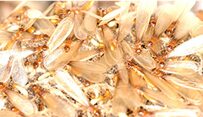
Swarmers
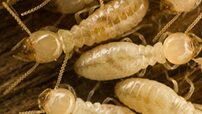
Workers
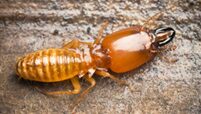
Soldiers
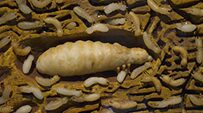
Queen
A termite colony reaches its maximum size in approximately 4–5 years and could have between 60,000 to 200,000 workers. New colonies of termites are formed when winged termites from a parent colony emerge in flight, known as a swarm.
Swarms of termites are common in the spring and fall, especially after rain on a warm day. The winged, reproductive termites are dark brown to brownish-black and have two pairs of equal-sized wings that extend beyond the body. After swarming, winged termites return to the ground and shed their wings.
The now wingless male and female termites pair off and search for wood and moist soil.
These bugs serve an essential function in nature by feeding on wood converting dead trees into organic matter. Unfortunately, the wood in buildings is equally appealing for termites, and they cause significant damage to residential and commercial properties.
ZipZap Termite & Pest Control can eliminate the threat of termites to your home. Call today to schedule an appointment.
The Difference Between Termites and Ants
Flying ants and swarming termites are often difficult to tell apart. Termites have relatively straight, beadlike antennae, while ants have elbowed antennae. Termites have two pairs of wings (front and back) that are of almost equal length. Ants also have two pairs of wings, but the fore wings are much larger than the hind wings. The termite's abdomen is broadly joined to the thorax, whereas the abdomen and thorax of the ant are joined by a narrow waist called a petiole.
Feeding Habits of Termites
Subterranean termites feed exclusively on wood and wood products containing cellulose. Termites have protozoa (microorganisms) in their intestines that produce enzymes to digest cellulose. Although termites are soft-bodied insects, their hard, saw-toothed jaws work like shears and can bite off tiny wood fragments, one piece at a time. They often infest buildings and damage various materials, including lumber, wood panels, flooring, sheetrock, wallpaper, plastics, paper products, and fabric made of plant fibers. Termites can inflict severe and costly damage; they can cause buildings to lose structural strength; ruin floors, carpets, and clothing; and destroy furniture, artwork, books, and valuable papers.
Communication in Termite Colonies
Termites primarily communicate by secreting pheromones chemicals, and each colony develops its own characteristic odor. Termites can instantly recognize intruders and secrete a pheromone to alert the colony and signal the soldiers to attack. Workers secrete chemicals when they locate new food sources so that others can follow the trail. Chemicals are also used to regulate the proportion of termites in each caste. Nymphs (immature termites) can develop into workers, soldiers, or reproductive adults depending on the colony's needs.
Sound is another method of communication in termites. Soldier and worker termites may bang their heads against tunnels to create vibrations and alert others in the colony. This allows the colony to mobilize and defend itself against a perceived threat.
Mutual exchange of food also enhances the recognition of colony members.
Evidence of Termites in Your Kansas City Home
Wood damaged by termites will have remains of mud tubes attached to galleries or tunnels in an irregular pattern. The tunnels may contain broken mud particles and fecal materials. If the colony is active, white termites may be found in infested wood.
The presence of mud or shelter tubes extending from the ground to woodwork or foundation walls also indicates a termite infestation. Each mud tube is approximately the diameter of a pencil lead. Workers travel periodically via sheltered tubes to their nests to retain moisture and perform feeding duties.
Additionally, flying winged termites or shed wings inside your property indicates an infestation.
How Old Is the Termite Damage I Found in My Home?
Based on regular feeding activity, it takes termites 3 to 8 years to cause significant damage. It is said that under ideal conditions, a termite colony of 60,000 workers can consume a foot-long plank of 2″ x 4″ pine in 118–157 days. The feeding activity of termites is reduced during the cold season, so the extent of the damage may differ depending on when an infestation occurs.
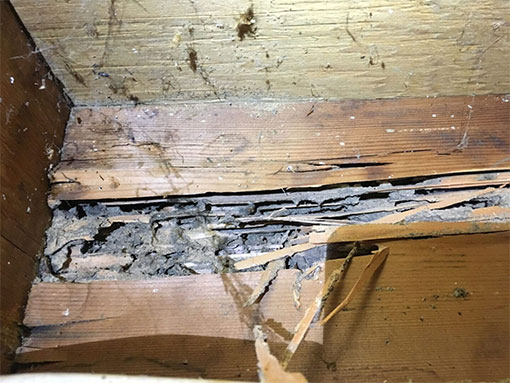
Inspection for Subterranean Termites in Your Home
Termite damage may be located by probing wood with a screwdriver, ice pick, or knife. Begin your inspection in the basement and use a bright flashlight. Look for mud tubes and evidence of swarmers. If necessary, request the services of a pest control professional or an experienced entomologist. A qualified inspector should examine the exterior and interior surfaces of the foundation, focusing on wooden constructions built on or near soil. Mud tubes are solid evidence of termite activity.
Other Sites Requiring Inspection:
If Termite Treatment Is Necessary for Your Kansas City Home
Do not panic. There is no need to be alarmed if termite activity is found in your home and treatment is required. Termites work slowly, and the structure will not be extensively damaged or collapse overnight.
Take your time to make a sound decision—do not be pressured into picking a company or selecting a treatment without sufficient information. If you decide to hire a commercial pest control service, get two or more cost estimates. It is important to request a specific plan of action so that you know the locations of termite activity and the treatment methods suggested for these areas.
Ask for copies of warranties and insecticide labels, as well as written information about woodwork repairs and chemical treatment procedures. Ask about liability insurance and compare bids before choosing a company.
Beware of the following situations:
ZipZap Termite & Pest Control is a Certified Sentricon® Specialist in Kansas City.
Give us a call today to install the Sentricon® Termite Colony Elimination System, a cost-effective way to protect your property.

No Termites, No Termite Colony
Thirty separate university studies and seventy published scientific articles attest to the effectiveness of the Sentricon bait system for eliminating termite colonies. And while third-party validation is appreciated, the actual proof comes from the millions of customers across the country whose properties were saved from termite damage, thanks to the Sentricon bait system.
Termite Baiting In Your Home
You spend a lot of time and money on your home. The Sentricon termite bait system protects your investment. Termite baiting is a quicker, less-invasive treatment than liquid termiticide. It is better for your home because it doesn't require drilling holes in floors and walls. And it is better for your yard because it involves less digging for termites.
What Makes The Sentricon Termite Colony Elimination System The No. 1 Brand In
The Industry?
In all these ways and more, the Sentricon termite bait system can protect your home.
The Threat Of Termites Is Real In Kansas City, And It's Measured In Dollars
It is unlikely that you will encounter a termite colony because they live underground. So, it's hard to imagine that they could be attacking your most important investment – your home – as you read this. But there's a good chance that they are. Every year, more than 5 million U.S. homeowners discover a termite problem. It's more common than the damage caused by storms, fires, and earthquakes, and yet its costs are rarely covered by homeowner's insurance.
The Green Answer To Termite Control In Kansas City
Most Kansas City residents prefer an environmentally-responsible option to termite control, as long as the treatment is safe and effective. The Sentricon termite bait system meets these requirements; it is designed to prevent environmental exposure and can be removed if desired. The Sentricon termite bait system was registered by the U.S. Environmental Protection Agency under the Reduced Risk Pesticide Initiative and is the only termite control product ever to receive the Presidential Green Chemistry Challenge Award. As a green product, the Sentricon termite bait system gives you peace of mind in more ways than one.
Homeowners In Kansas City Prefer The Sentricon Termite Bait System
People prefer the Sentricon Termite Colony Elimination System to any other brand when protecting their homes from termites. It has protected more than two million structures, including the Statue of Liberty, the White House, the Alamo, and many other national treasures.
If termites are present on your Kansas City property, the trained pest professionals at ZipZap Termite & Pest Control will use the Sentricon termite bait system to eliminate the colony and prevent future infestations. This is made possible by placing stations in the soil around your home. The bait system is less disruptive and more effective than traditional methods.
The Sentricon termite bait system revolutionized termite control and prevention since it was introduced. After a decade of proven performance, it has become the standard for termite colony elimination in Kansas City and the U.S.
Death To The Queen
Sentricon used scientific knowledge of termite behavior to design its product and ensure the effective elimination of colonies. The Sentricon Termite Colony Elimination System ensures that all colony members are killed – including the queen, who can produce tens of thousands of eggs in her lifetime – by ending the food chain needed for survival. With the proven ability to wipe out existing and future house-hungry generations, Sentricon gives your Kansas City home complete protection from termites.
ZIPZAP TERMITE & PEST CONTROL
If you find a bug in or around your home and need it identified, take a picture. Then text or email to the text line or email address below.
Please DO NOT text to the (816) 407-PEST number.